From bamboo to your bottom: This is how our factory in Ghana works
Building a green factory sounds nice and simple. Put some bamboo in a machine, turn it into pulp, and bob's your uncle. The reality, of course, is a little less smooth. Making paper costs energy, water, and additives. Ours does too. The difference lies in the choices you make at every step and in how honest you dare to be about what still needs to improve.

That is why we are taking you to our bamboo pulp factory in Akosombo, Ghana. From the farmer who supplies their bamboo to the pulp sheet that goes to a paper mill. No polished sustainability story, just the entire process. Including the good parts, the tricky parts, and the steps that still lie ahead of us.
Why we do this in Ghana specifically
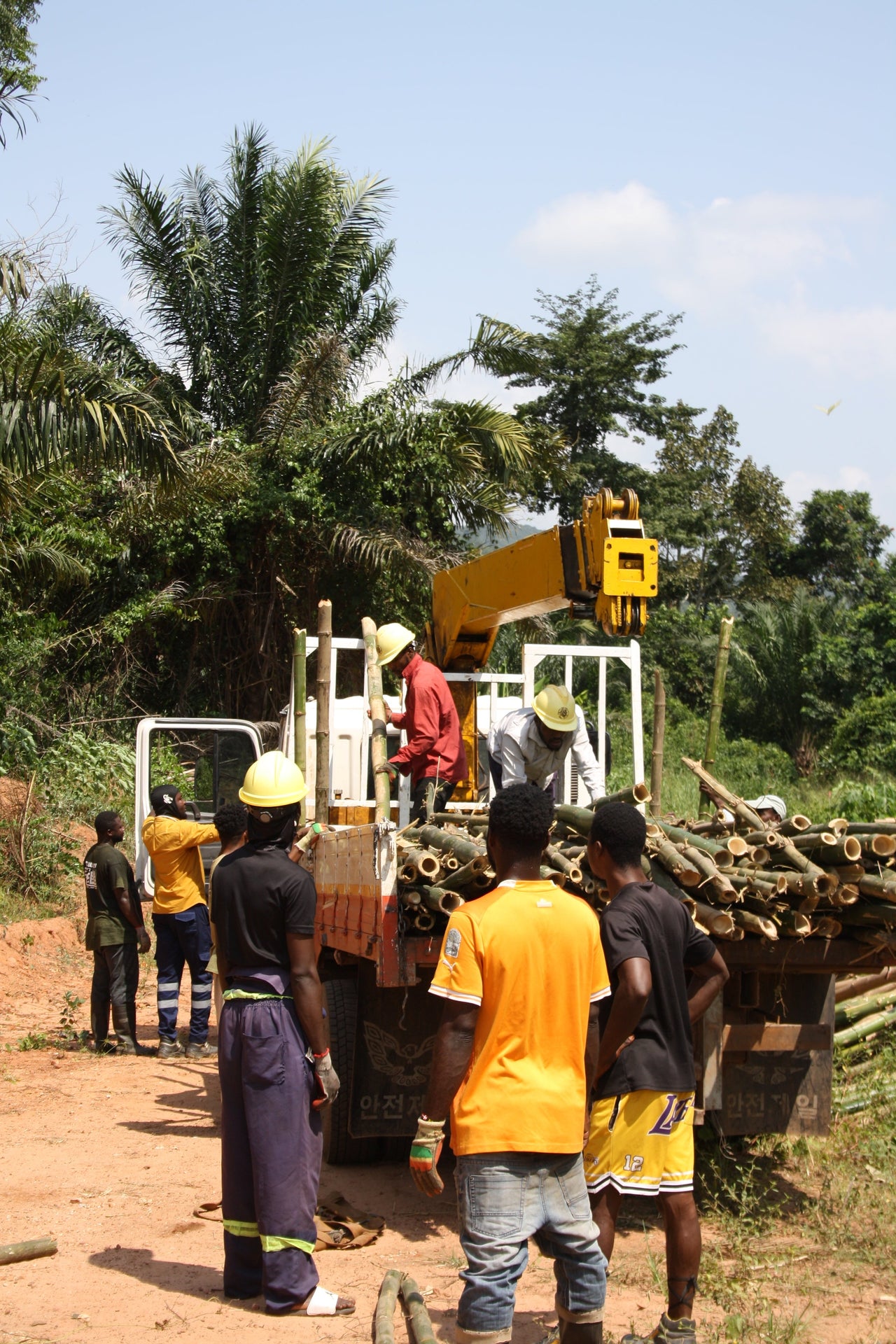
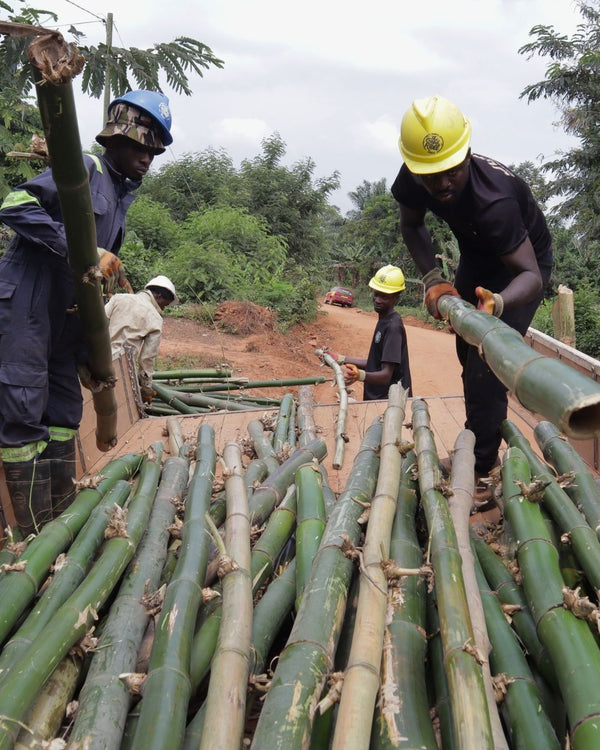
Ghana has a lot of Bambusa vulgaris. This bamboo species grows quickly and was planted in the sixties and seventies to combat deforestation. After that, it wasn't used for a long time. For many farmers, the bamboo grew like a weed between crops such as cassava, bananas, and palms. Sometimes, it was even burned.
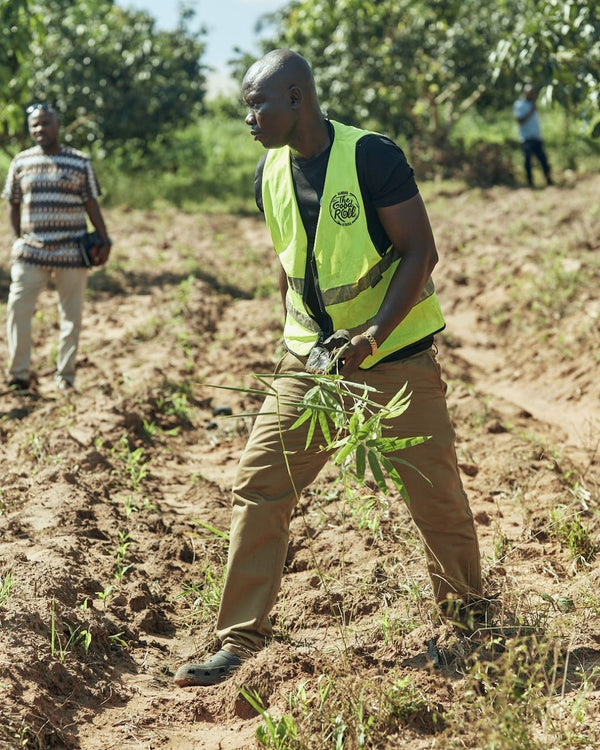
We buy that bamboo directly from local farmers and process it into paper pulp in Ghana. As a result, a much larger share of the value remains in the country where the raw material grows. Farmers get an extra source of income, and local jobs, technical knowledge, and new business activity are being created in and around the factory.
By now, 3,877 farmers are registered and 843 are actively supplying. According to our Impact Report, their income rose by an average of 59 percent. Those are figures we are proud of. At the same time, we want more and more registered farmers to actually be able to supply. For that, production in the factory needs to continue to grow.

Harvesting without clearing everything out
Bamboo is not a tree, but a type of grass. After the harvest, the roots remain in the ground and the plant grows back. That helps to hold the soil together and makes replanting after every harvest unnecessary.
That does not mean you can harvest without limit. That is why we take a maximum of 20 percent of the available bamboo per farmer. This way, the landscape remains green, the plant gets time to recover, and farmers keep space for their other crops. Bamboo should provide an extra income, not become a new dependency.
We use Farmerline to register farmers, deliveries, and payments. That makes the chain more traceable and helps us monitor where the bamboo comes from and who is being paid for it. Not very sexy, but quite important.

From bamboo stalk to pulp sheet
After harvesting, the bamboo is cut into smaller pieces and brought to our factory in Akosombo. There, three production lines process approximately 50,000 kilos of bamboo daily into up to 25 tons of dried pulp sheets. That is roughly equivalent to the amount of fiber for 225,000 rolls of toilet paper.
First, the bamboo is reduced to chips. These go into a closed boiling process together with water and additives. Through heat, pressure, and an alkaline environment, lignin is released. Lignin is the natural substance that holds the fibers in the plant together. After that, the pulp is washed, screened, and refined. The clean fiber mass is then pressed, dried, and stacked into compact pulp sheets.
Important detail: in Ghana, we make pulp, not yet ready-made toilet rolls. The pulp sheets go to specialized paper mills that turn them into tissue paper and eventually toilet rolls. Because pulp sheets are much more compact than finished rolls, up to three times as much raw material fits into one container. That saves on transport volume.
Do we use chemicals?
Yes. A pulp process without any chemistry does not exist. Simply grinding up bamboo and adding water is not enough to get strong, clean paper fibers. The lignin must be released from the fibers, and additives are needed for that.
In our process, we use enzymes and magnesium hydroxide, among other things. Enzymes help break down plant components. Magnesium hydroxide provides the alkaline environment in which the fibers are released more easily. Afterwards, the pulp is extensively washed and inspected.
We do not use chlorine or peroxide to bleach the pulp extra white. That is also why our bamboo pulp retains its natural color. Maybe less snow-white, but a lot more honest about what you are holding in your hands.
We therefore consciously do not call our process chemical-free. That simply wouldn't be true. Our goal is to use as few additives as possible, to handle what we do need responsibly, and to measure with increasing precision how much we use per ton of pulp. The full recipe and consumption per ton are not yet public. We want to document this better and make it transparent in the coming period.

Where does the energy come from?
A pulp factory needs electricity for the machines and a lot of heat for the boiling process and drying. The electricity comes largely from hydroelectric power in the region around the Akosombo Dam. For the heat, we use biomass, including bamboo residues from our own production process.
According to our Impact Report 2025, hydroelectric power and biomass together save over 8,000 tons of CO₂ annually compared to a similar process using fossil energy. That is a solid step forward, but not the same as zero emissions. Biomass must be collected, transported, and burned. Transport and other parts of the chain also cause emissions.
That is why we prefer to say that we are replacing fossil energy as much as possible rather than waving a magical CO₂-free stamp. The next step is a full, independently verified lifecycle analysis. Then we can not only say that our choices are designed to be better, but also show exactly what the total climate impact is per ton of pulp.
And what about water?
Making paper pulp requires a lot of water. That applies to every pulp factory, and thus also to ours. Water is needed to release the fibers, wash the pulp, and transport it through the production lines.
A portion of the process water is treated and reused. Nevertheless, we do not call the factory water-neutral. For that, we currently lack independently verified figures on total consumption and water quality per ton of pulp. We are therefore working on better measurements, more reuse, and an increasingly closed water cycle, because we are heading toward 100% closed loop in the future. It is precisely on this subject that we want to be able to report much more clearly in the coming years.
What happens to the residual flows?
When shredding and processing bamboo, dust, short fibers, and other organic residues remain. We use a portion as biomass for heat. Other usable residues can return to the soil as compost.
Our ambition is to convert a portion of these residual flows into biochar starting in 2027. In this process, organic material is converted into a carbon-rich material at high temperatures and with little oxygen. Biochar can store carbon for a long time and can be used to improve agricultural land.
But here too: that is a next step, not a current achievement. As long as the installation is not yet running commercially, we do not count that future climate gain just yet. Build, measure, and prove first. The confetti comes later.
The impact is not just in the machine
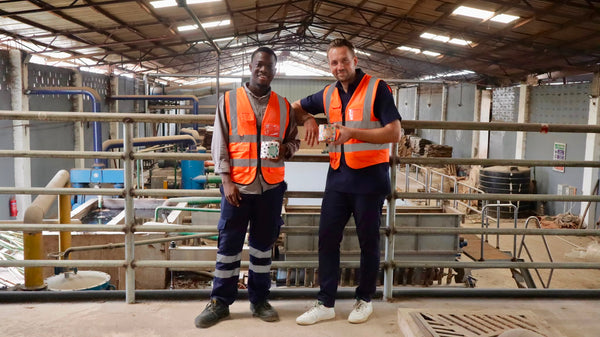
Our factory now provides direct employment to more than a hundred people in Akosombo. According to our Impact Report, salaries are 15 to 25 percent above the local average. Employees receive training and the opportunity to advance. Eliot started on the shop floor and grew into a manager role. That is exactly why we didn't just want to extract raw materials from Ghana, but wanted to build the processing and expertise locally.
Moreover, the factory has influence beyond its own gates. Every employee supports a family, farmers earn money from bamboo, and local transporters, mechanics, and suppliers get work. In this way, a raw material that had hardly any value is becoming part of a new local industry.
What quality marks does the factory have?
We want to be very clear about this. As an organization, The Good Roll is B Corp certified. Some end products and European production partners also have their own quality marks and certifications. These do not automatically apply to our bamboo pulp factory in Ghana.
Our factory is also not currently WFTO certified or recognized. We hope to grow toward that in the future, but as long as that is not the case, we won't put it on the box. That would be pretty shitty.
We do work according to principles that align with that, such as direct payments to farmers, transparency in the chain, good working conditions, and the exclusion of child labor. Future WFTO recognition would be a nice independent confirmation of that. Until then, our work must speak for itself.
So, how sustainable is the factory really?
Our factory is not impact-free. We use water, energy, and additives. We transport bamboo to the factory and pulp to paper mills. And we do not yet have a full, independently verified lifecycle analysis that shows every impact per ton of pulp.
What we have built, however, is a fundamentally different chain. With a rapidly regrowing local raw material, controlled harvesting, extra income for farmers, processing in Ghana, hydroelectric power, biomass, and a growing destination for residual flows. With this, we are tackling several problems of the traditional paper chain simultaneously.
And we are not finished yet. We want to further reduce water consumption, measure the use of additives more precisely, utilize more residual flows, produce biochar, have our total footprint independently verified, and hopefully one day meet the requirements of the WFTO.
This factory is therefore not a green end point. It is a working beginning. A journey from weeds to income, from bamboo to pulp, and eventually from a simple toilet roll to a paper industry that becomes a little less shitty every day.
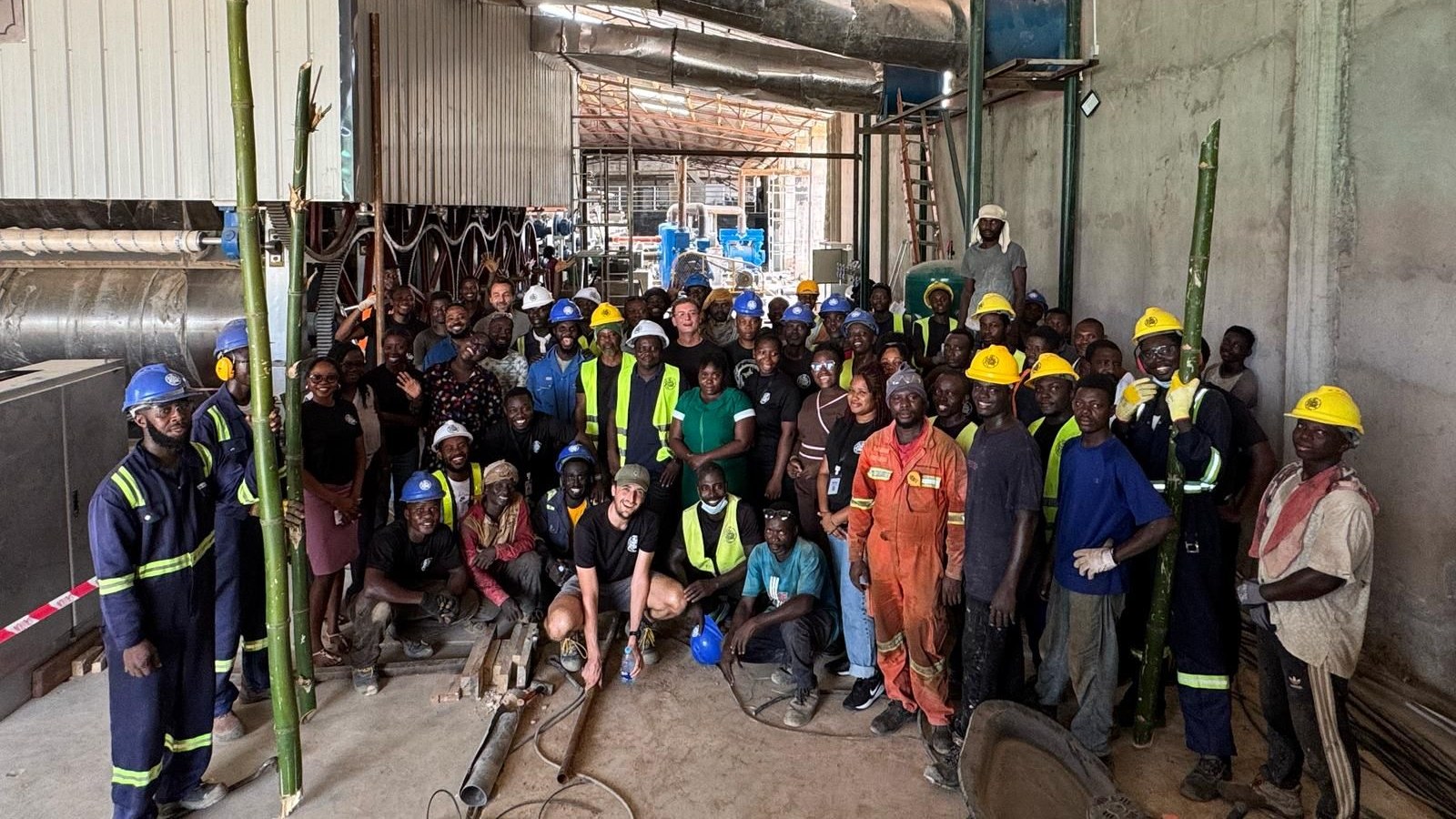
Curious about all the figures behind our impact? Take a look at our Impact Report 2025.
Keep rolling with us
-

The Good Roll versterkt financieel team
-
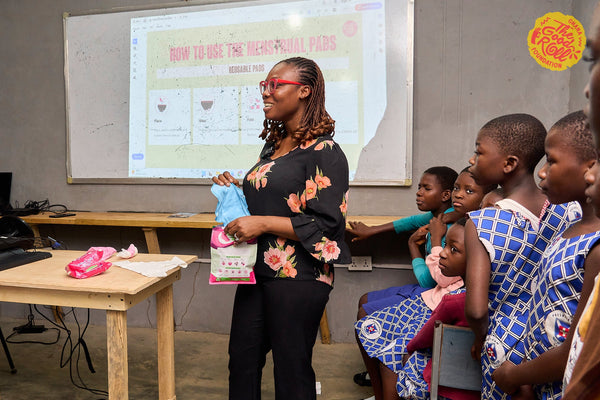
Period Power in Ghana: The Good Roll Foundation Makes an Impact at 10 Schools
Foundation · -
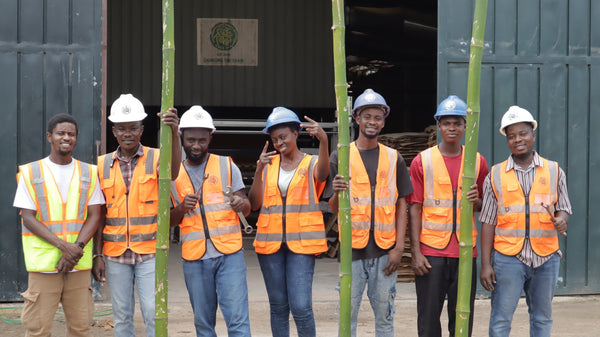
Turning the dials at our factory in Afabeng. Constant tweaking is necessary every day.
Duurzaamheid · -
Saying goodbye is always difficult.
Duurzaamheid · -
Why The Good Roll combines share and bond certificates
-
Why it is necessary to radically change the paper industry
