Turning the dials at our factory in Afabeng. Constant tweaking is necessary every day.
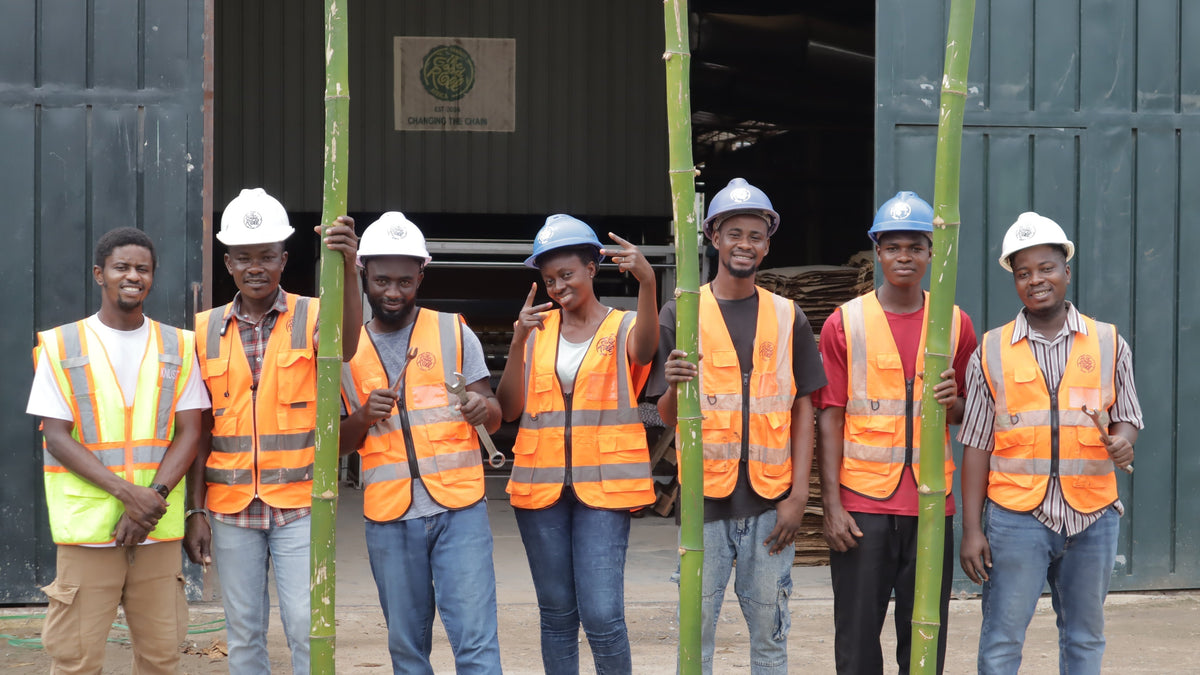
Every day, we work on further expanding our paper chain in Ghana. Our paper mill in Afabeng, near Akosombo, is operational and supplies paper and bamboo pulp to our customers on a weekly basis. Our products are already being actively used both locally in Ghana and internationally. Lines 2 and 3 produce an average of 12 to 18 tons of recycled paper per week for local customers. At the same time, Line 1 runs on bamboo from Ghanaian farmers and supplies our bamboo pulp to fixed production partners in Europe, who are already using it to manufacture retail, B2B, and B2C products for us.
Industrializing in this sector requires a realistic outlook and quick practical action: from securing the right pulp quality to tight cost control and making our impact measurable.
Farewell to the first pilot location and focus on Afabeng
After evaluation, our first pilot location in Akwamufie proved unsuitable for the intended production and line expansion. The site presented logistical problems, the infrastructure was inadequate, and no suitable local management was available at the time. To avoid wasting our resources, the factory was sold on May 30, 2023. Our former business partners took over the location and have continued under the name The Green Roll, an entity completely separate from The Good Roll.
We subsequently shifted 100% of our operational focus and investments to Afabeng. Following preliminary research in the Netherlands and the establishment of the Ghanaian company TGRG Pulp Company Ltd, a team of approximately 25 people started construction of our first bamboo pulp line with a capacity of 25 tons per day in September 2024.
We were able to make use of part of an existing paper mill for this. We built a connecting hall and set up a separate area for cooking the bamboo. Major construction work began in October 2024, after which the first machines arrived in November and installation was carried out in stages to allow for controlled test runs.
Quality, testing, and market response
The first sheet of bamboo pulp came off the line in March 2025. This was a significant milestone, but also the beginning of an intensive testing period where both the machines and processes were new to the team. The first weeks were spent on test runs, adjustments, and learning. We had sufficient bamboo available; the biggest challenge was to turn it into pulp of consistent quality.
The quality of our bamboo pulp was also independently tested in November 2025 by the research institute LEPAMAP-PRODIS in Girona. Their report showed that our pulp could be easily defibrated without added chemicals, had an average fiber length of 1.8 millimeters, and exhibited a tear resistance more than double that of the Chinese reference pulp.
By the end of 2025, we had secured two fixed production partners for our bamboo pulp who are already actively using this pulp in their production. Our Italian factory partner regularly purchases pulp and processes it into finished products for our retail range. Our Spanish factory partner uses the pulp on a regular basis for our B2B and B2C product lines. These are active, ongoing production partnerships.
At the same time, we noticed in practice that the direct demand for unbleached pulp sheets is limited. Good pulp quality did not, therefore, automatically lead to large sales volumes. To make production commercially viable, we shifted our focus to market demand, specifically parent reels that processors can directly convert into tissue end products.
Reorganization and strict governance
In the second half of 2025, our workforce grew faster than the actual production and turnover at that time justified. We significantly expanded our teams in the office, the factory, and in the field. At its peak, many people were working in bamboo harvesting, the factory, and the office. Personnel costs rose sharply while revenues lagged. Moreover, HR, payroll, and financial administration were handled largely manually, leading to confusion and friction.
The first quarter of 2026 was therefore a difficult period during which we had to restructure. We brought the size of the organization accurately into line with actual production. Today, our permanent organization consists of 8 office staff and 86 employees in the factory and the field, supplemented by a flexible layer for peaks in harvesting and production.
In addition, we have tightened our governance and management. The Ghanaian team on-site is directly directed and managed from the Dutch head office. Financial administration has been digitized in Odoo, and personnel records and payroll processing have been automated, including biometric attendance registration, which is strictly managed from the Netherlands.
Daily management on-site is in the hands of our Ghanaian management team led by Eliot Pappoe, Emmanuel Paitsil, and Chief Nana Boafa Ansaprem IV, with R&D and business development separated from daily operations.
Current production and sales in 2026
During this period, we also brought two existing production lines for parent reels, Line 2 and Line 3, back into use after major adjustments and investments. These lines process recycled paper for the local Ghanaian market and are also used to train employees. Lines 2 and 3 currently provide a combined average of 12 to 18 tons of paper per week, with the goal of increasing this to 25 tons per week. Local customers purchase this production on a weekly basis.
In the second half of 2026, we see further progress in the export market. There are two containers on their way to European customers and a third container is ready for shipment. In addition to our partners in Spain and Italy, we are in discussions with a company in the UK that has indicated a need for one container per week, as well as with a retailer. Based on these discussions, we are aiming for a volume of five to six containers per month by the end of 2026. This objective remains explicitly dependent on confirmed orders and a further increase in production.
Raw materials, energy, and our farmer network
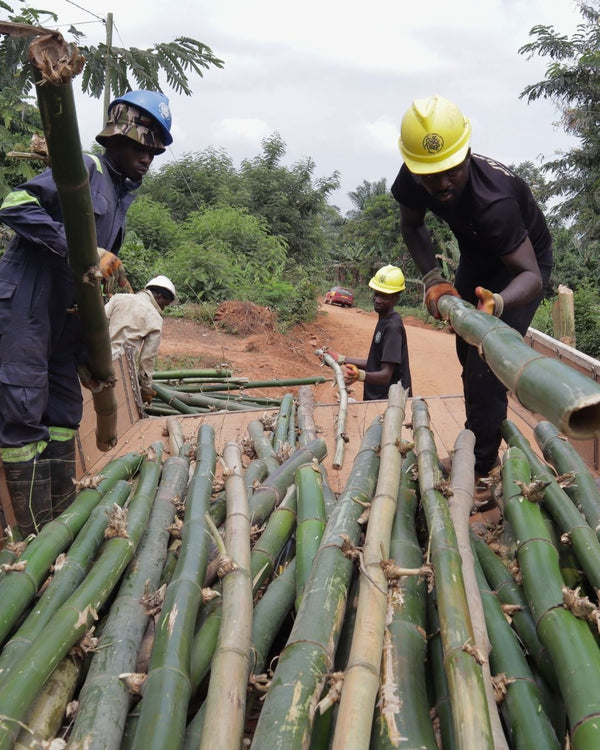
We are also working on improving our raw material supply. Bamboo harvesting is increasingly supported by machines; while working with machetes remains possible, larger volumes require faster and more efficient methods. Furthermore, we will use coconut husks for nearly 90% of the biomass for our energy needs, which lowers production costs.
To run Line 1 at full capacity, we expect to need bamboo from approximately 800 farmers. More than 3,000 farmers are currently registered in our Farmerline system. Together with our permanent factory and field staff, we are creating direct and indirect jobs and additional sources of income. For additional work and peaks in production or harvesting, we hire extra personnel, allowing our workforce to grow in line with actual needs.
Next steps with Line 4 and FSC certification
An important next step is Line 4, a new production line for parent reels with a planned capacity of 50 tons per day. This will allow us to process our bamboo pulp directly into parent reels in Ghana for external customers, which aligns with clear market demand. The paper on Line 4 will be bleached using the Elemental Chlorine Free (ECF) process to meet the current demand for white tissue paper. The goal is for customers to gradually switch to the natural, unbleached color of bamboo paper over the coming years. Customers have already signed agreements to purchase from this line, which provides a concrete commercial basis for the expansion. We hope to commission Line 4 in the first quarter of 2027, subject to financing, equipment delivery, and installation.
Finally, we are working toward FSC certification for our bamboo chain to have our management, safe working conditions, and the responsibility of harvest areas independently audited. Work still needs to be done, including setting up a group management system and further mapping out plots. We are aiming for the end of 2027, with feasibility depending on implementation and audit results.
Our factory in Afabeng has grown from the construction and initial testing phase into a functioning organization with increasingly better control over quality, costs, and governance. The past year has demanded much from our team, but these experiences show how we can better align our production with customer demand.
Do you have any questions about our factory, the figures, or operational matters? Please feel free to contact Sander de Klerk via sander@thegoodroll.nl.
Our address: TGRG Pulp Company Ltd, P.O. Box AB 145, Afabeng, Akosombo, Eastern Region, Ghana.
Keep rolling with us
-
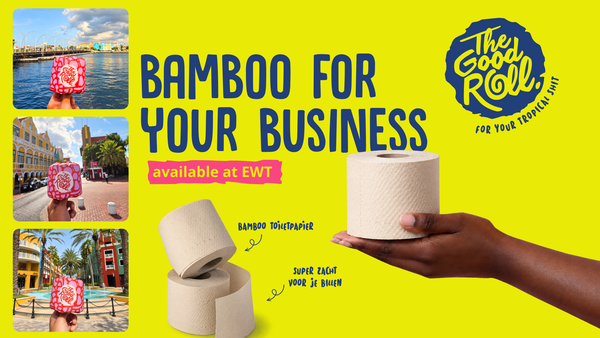
The Good Roll op de ABC-eilanden
-
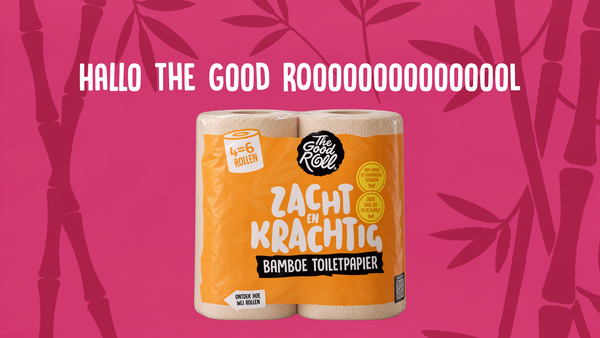
The Good Roll ligt in de Jumbo
-
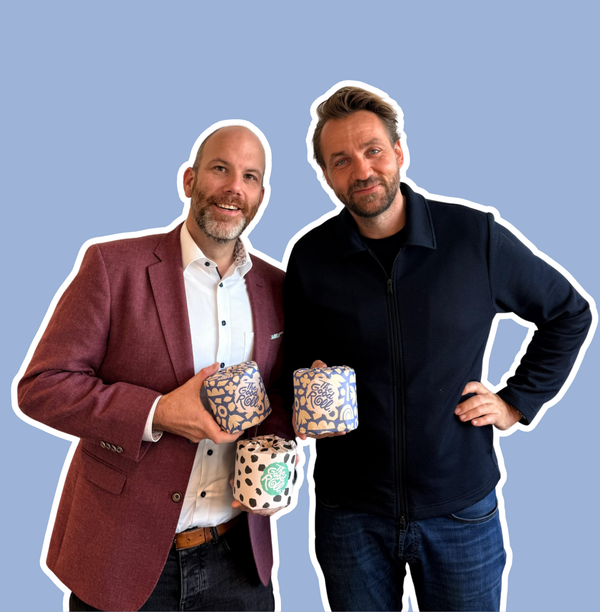
The Good Roll versterkt financieel team
-
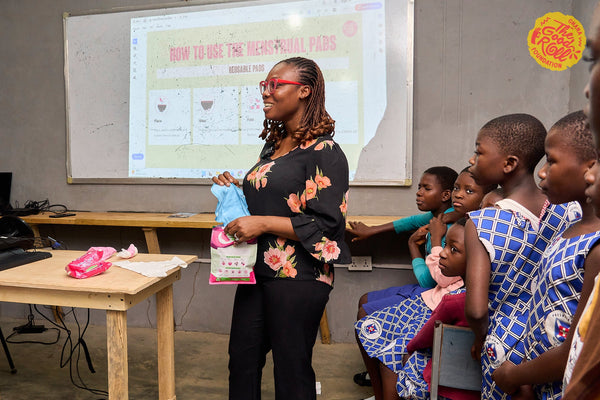
Period Power in Ghana: The Good Roll Foundation Makes an Impact at 10 Schools
Foundation · -
Saying goodbye is always difficult.
Duurzaamheid · -
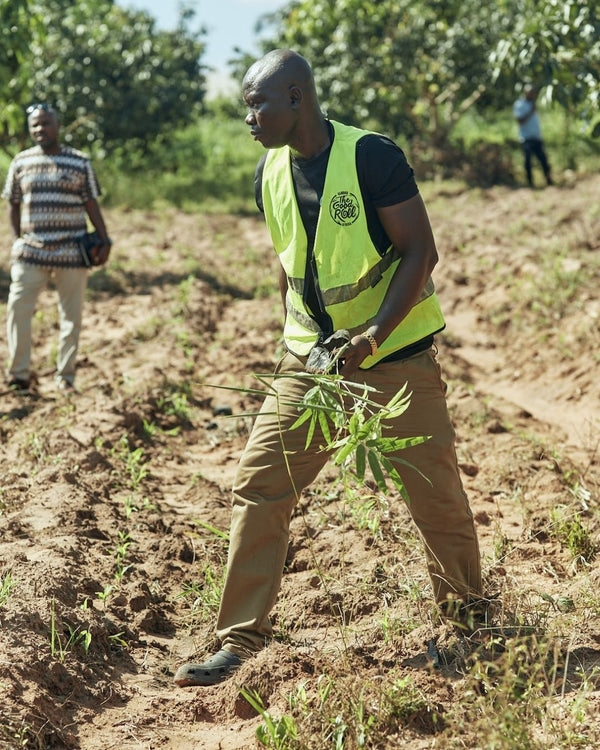
Why The Good Roll combines share and bond certificates
