How toilet paper can change the world (and the questions we get about it)
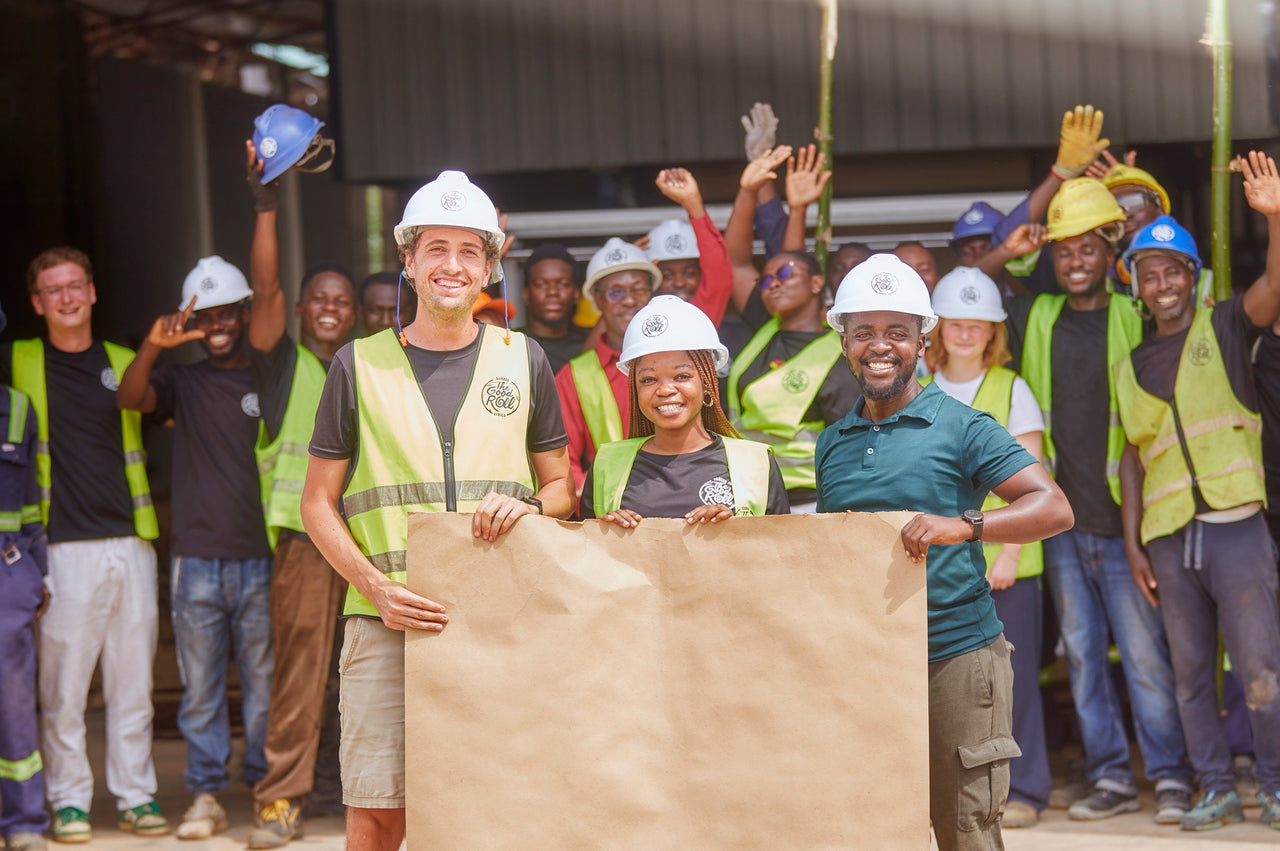
When we started The Good Roll, our idea was simple: make toilet paper that makes the world cleaner and fairer. Now, seven years later, we have factories in Ghana, work with thousands of farmers, and are supported by more than 4,230 bondholders and over 2,327 investors.
With that growth come, naturally, many questions. Logically so, because we are doing something that has never been done before: setting up an entirely new bamboo supply chain in Ghana and Europe. In this piece, we answer our most frequently asked questions, openly and honestly, exactly as things are.
Where does the money go?
Every euro we raise through bonds and investments is used to strengthen the chain we are building.
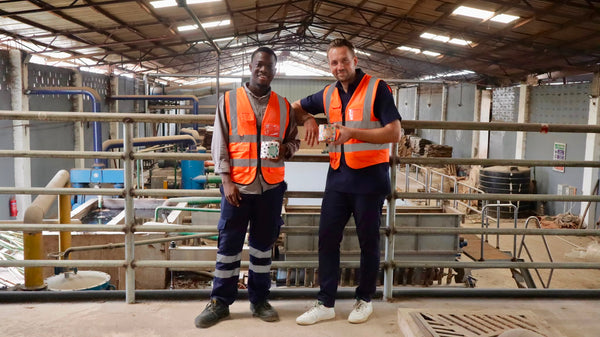
Our factories in Ghana are the heart of our model. We currently have two factories running, but not yet at full capacity. Scaling up takes time, training, and additional investment. Without these factories, there is no sustainable bamboo chain.
In addition, we have ongoing obligations. Yes, we have loans and debts. Just like any company in a growth phase. Part of the money goes toward paying those off. In doing so, we keep the foundation healthy and investor confidence high.
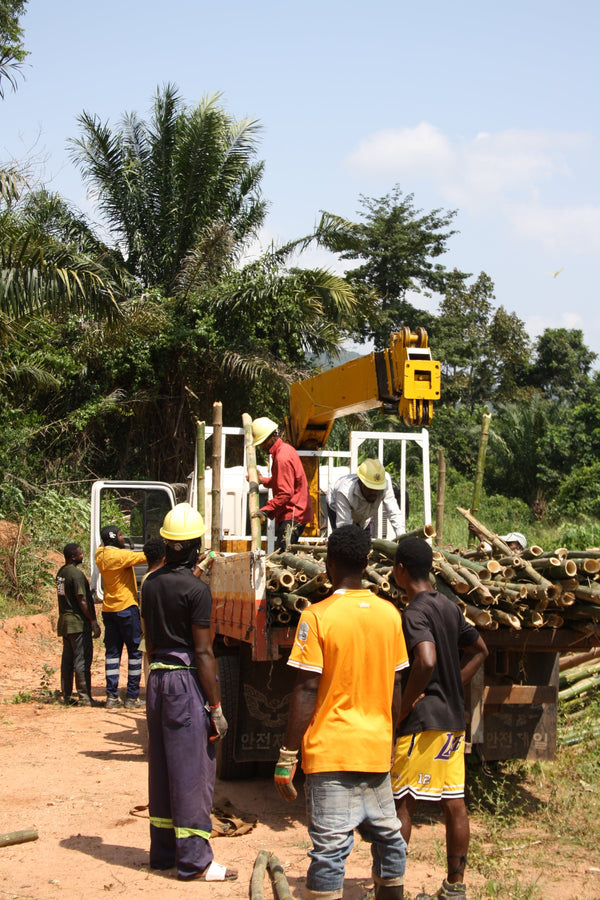
We also invest in collaboration with farmers. More than 2,500 farmers supply us with bamboo. We invest in training, fair payments, and a stable market. This provides families with direct income and security.
Furthermore, money goes toward production and innovation. We are already supplying pulp to partner factories in Europe. Following successful tests, this is now being turned into toilet paper. This makes the chain from bamboo plant to toilet roll a reality.
Additionally, we are entering a new market: the sale of parent rolls (large base rolls) to other toilet paper brands. By doing so, we are becoming not only a producer for ourselves, but also a supplier for major brands. This is unique and provides us with scale, volume, and continuity.
And finally, part of our profit and efforts continues to go toward where it all started: building toilets in Ghana and realizing safe sanitary facilities.
What is the status of the factories in Ghana?
The factories are running. That is a huge step. But in all honesty: not yet at full capacity. The reality is that scaling up takes more time and money than anticipated. Machines must be tested, staff must be trained, and processes must be stabilized.
What is already happening: we are producing pulp that goes to Europe. There, the tests have been successfully completed and toilet paper is now actually being produced. With this, we not only provide added value to our own brand, but we also demonstrate that the chain works.
And with the new opportunity, namely producing parent rolls, our factory becomes not just a supplier for us, but for the entire industry. That means scale, continuity, and the chance to become the leading sustainable bamboo paper supplier in Europe.
What about debts and obligations?
Like any growing company, we have loans and obligations. That is normal in a phase where you are building factories, connecting thousands of farmers, and setting up an international supply chain.
The difference lies in how we handle it. Several investors have already been fully repaid. The first interest payments to bondholders have been made. We are making regular repayments and ensuring that investments contribute to the further development of our chain.
Our model is clear: as soon as the factories are running at full capacity, those factories will pay everything back. That is when returns become structural, debts are paid off, and profit is generated.
Isn't the valuation too high?
Our valuation has been externally substantiated from the start. Upon the issuance of depositary receipts for shares, an independent party valued us based on ambition, growth, and future potential. In later rounds, the valuations were slightly lower, as they were aligned at that time with the expectations and the stage we were in.
Today, we are in a different position. With two factories running and off-take agreements with 2,500 farmers, we have a foundation we did not have before. That can lead to a different valuation, appropriate to the current phase and the opportunities that lie ahead.
But let’s be honest: valuation remains partly a matter of estimation, and the risk is high. It is ultimately up to every investor to determine whether they want to participate in this. And yes, things can also go wrong. That is part of doing business at this scale. Those who participate do not do so because it is risk-free, but because they believe in our mission and the opportunity to radically change a supply chain.
Are you transparent enough?
Transparency is our guiding principle. We publish updates, pay out interest, repay investments, and share our plans publicly. Sometimes practice moves faster than administration; that is the reality of building in two continents simultaneously. But everything is open for discussion and transparent for those who wish to follow our progress.
Why do you continue with bonds?
We are often asked: you have already raised a lot of money, why another round? The answer is simple: because we are in the middle of a phase where every euro is converted into growth and scaling.
Our factories in Ghana are running, but not yet at full capacity. To get there, additional investments are required: new lines, staff training, larger stocks of bamboo, and stable cash flow to be able to continue producing.
In addition, the new market for parent rolls opens up an enormous opportunity. For that, we need scale. This means investing in production and distribution so that we not only grow our own brand but also become a supplier for other brands in Europe.
Bonds are, for us, the way to finance that growth together with our community. We have consciously chosen to pay interest to thousands of fans and investors instead of to banks. In doing so, we are building not only factories but also trust.
How big is the risk?
Every investment involves risk. We are honest about that. Scaling up the factories is taking longer than planned. Cash flow can be tight, because investments are often needed before revenues are realized. We are building a chain in Ghana and Europe simultaneously – that requires courage and capital.
But this is also the opportunity. Investors participate because they believe in the transition. Because they see that we have already achieved a lot and because they want to be part of a radical change in the supply chain.
What have you already proven?
-
Trust: 4,230 bondholders and 2,327 investors have already helped us build.
-
Fulfilling agreements: multiple investors have been repaid, the first interest has been paid out.
-
Impact: two factories are running, thousands of farmers have additional income.
-
Production: pulp from Ghana is now being converted into toilet paper in Europe.
-
New horizon: with parent rolls, we are becoming a supplier for major brands, not just a producer of our own brand.
Why are you raising capital without AFM approval?
The AFM (Dutch Authority for the Financial Markets) states that a fully approved prospectus is only mandatory for issues exceeding 5 million euros per year. Our bond issues fall below that threshold and comply with exemption rules. This means we are operating fully within the legal framework.
We do, however, ensure that all terms, risks, and agreements are public and transparent for everyone. This way, every bondholder knows exactly what they are getting into. We consciously choose this format because we prefer to pay interest to our community rather than to banks.
What impact are you actually making?
Impact has always been the reason we started. Our model is not just about paper, but about people.
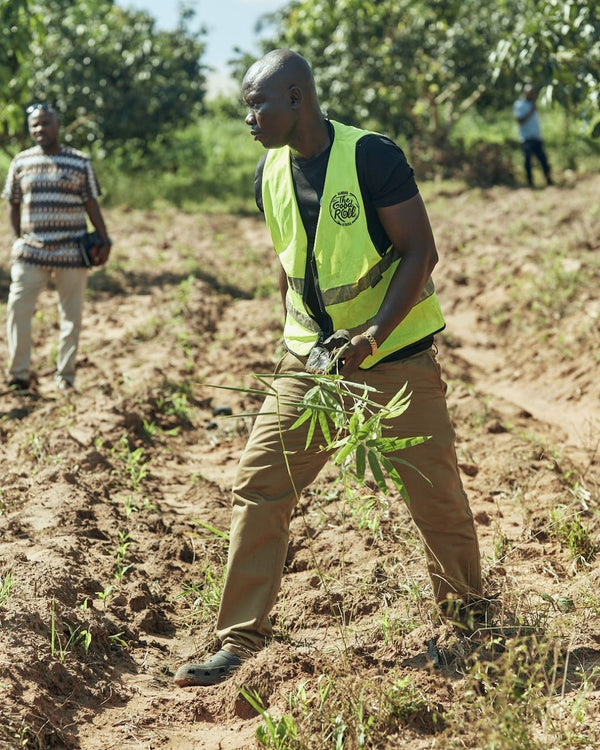
In Ghana, we are now working with more than 2,500 farmers who supply bamboo. For many of them, this is an additional and fair income that directly benefits their families. Bamboo grows quickly, restores the soil, and can be harvested year after year, without deforestation and without harmful chemicals.
Around our factories, work has also been created for about 200 people. From operators and technicians to logistics support and suppliers: the factory creates local employment and a chain that keeps value within the region itself.
And we invest in toilets and sanitary facilities. To date, we have built more than 233 toilets, which are used daily by over 12,500 people. For families, schools, and villages, this means a world of difference: better hygiene, more safety, and a healthier living environment.
By setting up this chain, we show that sustainability, employment, and social impact go hand in hand with a healthy business.
Why we share this
We often receive critical questions. That is part of doing business, and certainly at the scale at which we operate. We do not see that as a burden, but as a sign that people are involved.
We are not perfect. We make mistakes. Things take longer. But what remains is: our mission is radical, our approach is open, and our path is ambitious.
Those who invest in The Good Roll do not do so for a risk-free investment. They participate because they believe that even toilet paper can change the world. And together with thousands of investors and bondholders, we prove every day that it can.
Rolling with us?
We don't pretend it's easy. It's tough, it takes time, and it requires trust. But every day, our teams in Ghana and the Netherlands work incredibly hard to make this a reality.
Investors participate because they believe in the opportunity to change an industry. That carries risk, but also the promise of something much greater: a chain that is sustainable and fair, and a product that actually makes the world cleaner.
That is why we say: even with something as simple as toilet paper, you can change the world. And we continue building every day to prove it.
Keep rolling with us
-
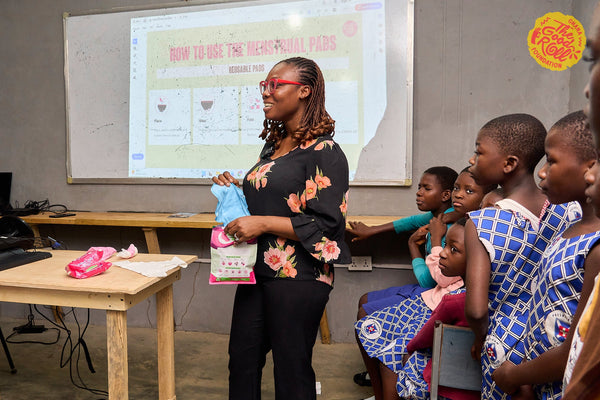
Period Power in Ghana: The Good Roll Foundation Makes an Impact at 10 Schools
-
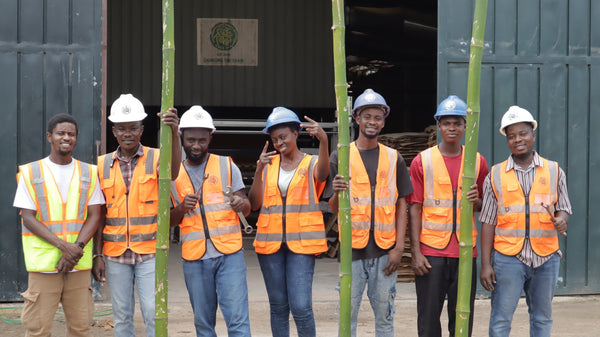
Turning the dials at our factory in Afabeng. Constant tweaking is necessary every day.
-
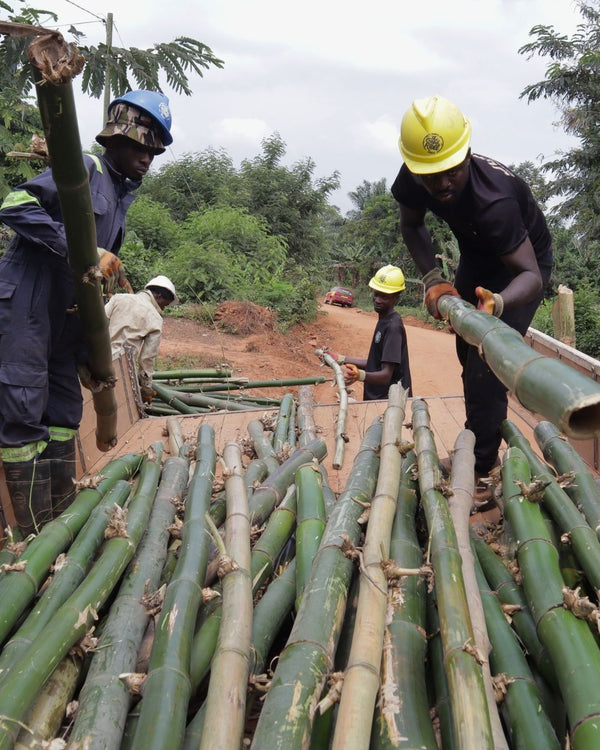
Saying goodbye is always difficult.
-
Why The Good Roll combines share and bond certificates
-
From bamboo to your bottom: This is how our factory in Ghana works
-
Why it is necessary to radically change the paper industry
